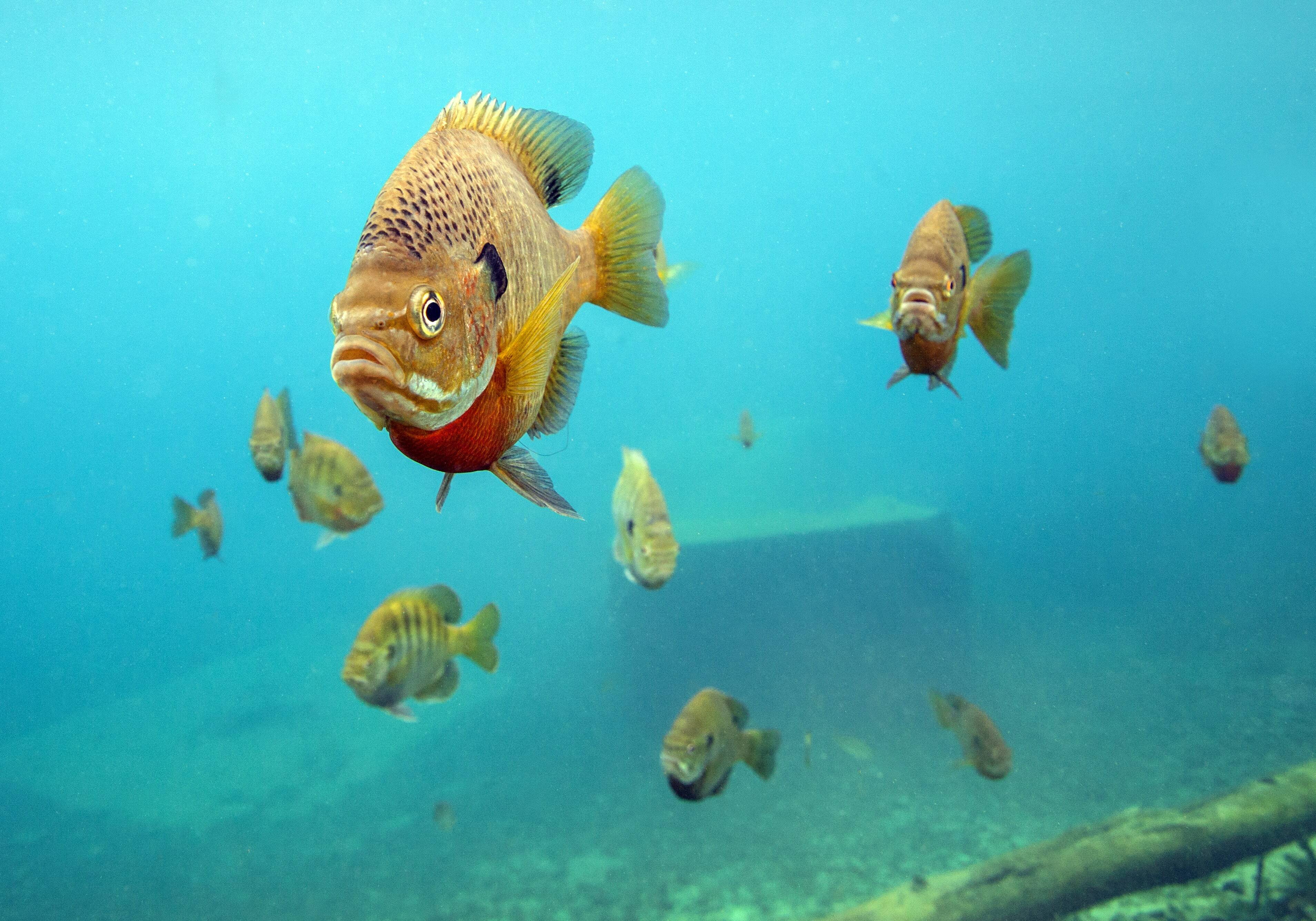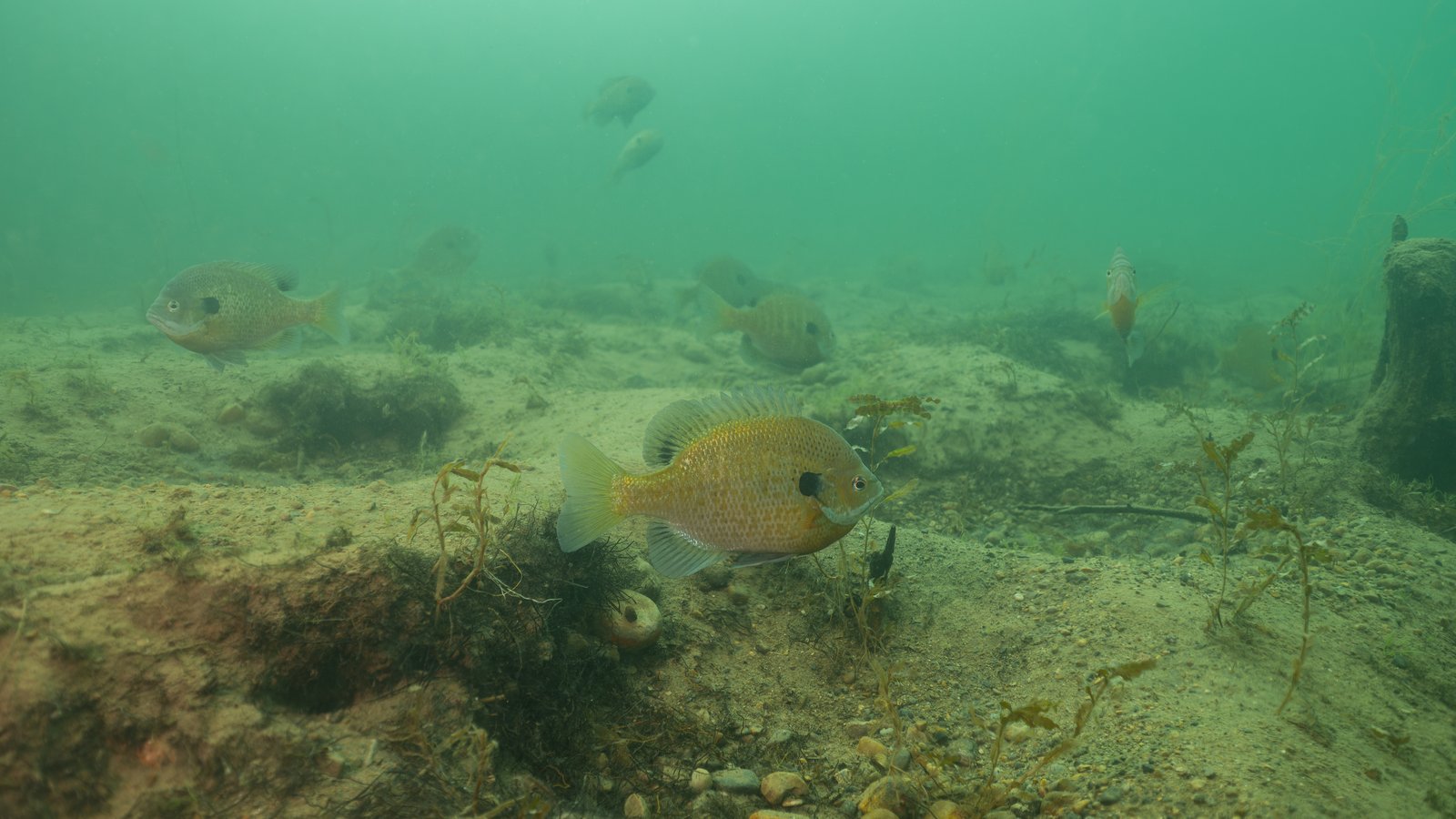
As summer temperatures rise across Wisconsin, ponds and lakes can experience conditions that place significant stress on fish populations. Warm water, low oxygen levels, algae blooms, and declining water quality can quickly create an unhealthy environment that increases the risk of fish kills.
Whether you manage a private pond, HOA lake, golf course water feature, farm pond, or municipal stormwater pond, understanding the causes of summer fish stress is essential for maintaining a healthy aquatic ecosystem. Proactive Wisconsin pond management strategies can help protect fish populations and improve overall water quality throughout the hottest months of the year.
What Causes Fish Stress in Wisconsin Ponds?
Fish are highly sensitive to environmental changes, especially during periods of extreme heat. One of the leading causes of fish stress in Wisconsin ponds and lakes is low dissolved oxygen.
As water temperatures increase, the amount of oxygen the water can hold naturally decreases. At the same time, fish become more active and require greater amounts of oxygen to survive. Aquatic plants, algae, and decomposing organic matter also consume oxygen, creating additional stress on the ecosystem.
Several factors contribute to fish stress during Wisconsin summers, including:
-
High water temperatures
-
Low dissolved oxygen levels
-
Excessive algae blooms
-
Overgrown aquatic vegetation
-
Stormwater runoff
-
Decaying leaves and organic debris
-
Poor water circulation
-
Sudden weather changes and heat waves
Heavy summer storms can further impact water quality by washing excess nutrients into ponds and lakes. This nutrient loading often fuels rapid algae growth, which can lead to severe oxygen depletion when algae die and begin to decompose.
Common Warning Signs of Fish Stress
Fish often display visible signs of stress before a fish kill occurs. Recognizing these warning signs early can help property owners take action before conditions become critical.
One of the most common indicators is fish gasping at the water surface, particularly during the early morning hours when dissolved oxygen levels are typically at their lowest.
Additional warning signs include:
-
Lethargic or slow-moving fish
-
Fish gathering near aerators or fountains
-
Increased algae growth
-
Murky or cloudy water
-
Water discoloration
-
Excessive aquatic weed growth
-
Isolated fish deaths
If multiple symptoms appear simultaneously, the pond may be experiencing significant water quality issues or oxygen depletion.
Why Fish Kills Occur During Wisconsin Summers
Most summer fish kills result from a combination of elevated water temperatures and low dissolved oxygen.
During daylight hours, aquatic plants and algae produce oxygen through photosynthesis. However, once the sun sets, oxygen production stops while respiration continues. This natural process can cause oxygen levels to drop dramatically overnight.
The risk becomes even greater during:
-
Extended heat waves
-
Periods of cloudy weather
-
Algae bloom die-offs
-
Heavy rainfall events
-
After large-scale aquatic weed treatments
Shallow ponds and stormwater retention ponds throughout Wisconsin are especially vulnerable because they warm more rapidly and often accumulate nutrients from surrounding runoff.
How to Prevent Fish Kills in Wisconsin Ponds
Preventing fish stress starts with proactive lake and pond management. Maintaining healthy oxygen levels and balanced water quality can significantly reduce the likelihood of fish kills.
Install a Pond Aeration System
Pond aeration is one of the most effective solutions for improving dissolved oxygen levels. Aeration systems circulate water throughout the pond, helping reduce thermal stratification, improve oxygen distribution, and support healthier fish populations.
Many Wisconsin pond owners use bottom-diffused aeration systems or decorative fountains to improve water circulation during the summer months.
Reduce Nutrient Runoff
Excess nutrients are a primary cause of algae blooms and declining water quality. Implementing proper watershed management practices can help minimize nutrient inputs.
Consider:
-
Limiting fertilizer applications near water
-
Installing shoreline buffer zones
-
Managing stormwater runoff
Manage Algae and Aquatic Weeds
Routine algae control and aquatic vegetation management help maintain oxygen balance and prevent excessive organic matter from accumulating.
Professional Wisconsin lake management programs often combine monitoring, biological solutions, and targeted treatments to maintain healthy conditions throughout the growing season.
Remove Organic Debris
Leaves, grass clippings, and other organic materials contribute to oxygen demand as they decompose. Regular removal of debris can help improve overall pond health and water clarity.
Reduce Sediment Buildup
Over time, sediment accumulation can increase nutrient availability and accelerate pond aging. Beneficial bacteria programs and sediment management strategies can help slow this process while supporting better water quality.
Monitor Water Quality
Routine water quality testing is one of the best ways to identify developing problems before they become severe. Monitoring dissolved oxygen, nutrient levels, algae activity, and overall water quality can help guide effective management decisions.
What to Do If You Experience a Fish Kill
If a fish kill occurs, quick action can help prevent additional losses and improve recovery efforts.
Remove dead fish as soon as possible to prevent further oxygen depletion caused by decomposition. Keep aeration systems and fountains operating continuously to increase oxygen circulation. Avoid applying additional algae treatments or herbicides immediately following a fish kill, as sudden vegetation die-off can worsen oxygen shortages.
A professional pond evaluation and water quality assessment can help determine the underlying cause and identify long-term solutions to prevent future fish kills.
Keep Your Wisconsin Pond Healthy All Summer
Summer fish stress is a common challenge for Wisconsin ponds and lakes, but many issues can be prevented through proactive management. By improving oxygen levels, reducing nutrient pollution, controlling algae growth, and monitoring water quality, property owners can protect fish populations and maintain a healthier aquatic ecosystem.
At Wisconsin Lake & Pond Resource, we provide customized pond and lake management solutions throughout Wisconsin. From pond aeration and algae control to water quality monitoring and fishery management, our team helps keep lakes and ponds healthy, beautiful, and thriving all season long.
About Wisconsin Lake & Pond Resource, A Jones Lake Management Partner
Wisconsin Lake & Pond Resource specializes in comprehensive lake and pond management solutions, including algae and aquatic weed control, aeration, hydraulic dredging, erosion control, and fisheries management. As a Jones Lake Management Partner, we serve a diverse range of clients, including HOAs, golf courses, municipalities, and private lake owners throughout the state of Wisconsin. With a commitment to science-driven strategies and environmental sustainability, Wisconsin Lake & Pond Resource helps maintain and restore aquatic ecosystems for long-term health and enjoyment. Visit us at www.wisconsinlpr.com