Because Wisconsin experiences shorter daylight hours in winter, solar fountains generally perform best from spring through fall. Many systems now include battery storage to maintain limited operation during overcast days, making them an efficient option for seasonal use.
Solar Diffused Aeration Systems
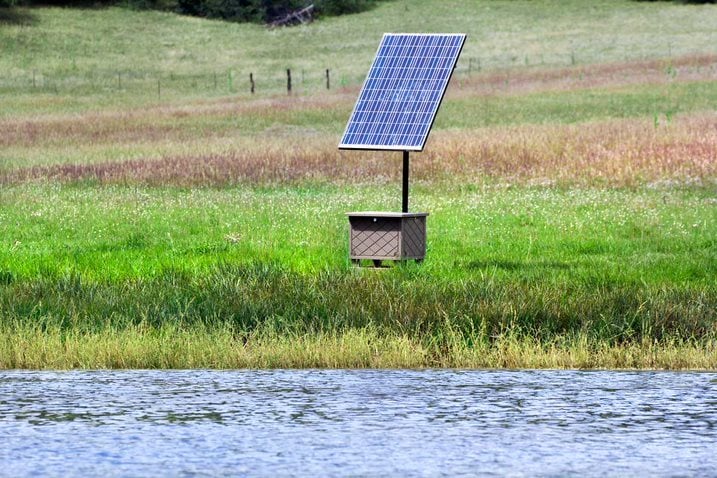
For larger or deeper ponds, solar diffused aeration provides stronger, more consistent water movement. These systems use a solar-powered compressor placed onshore that pushes air through weighted tubing to diffusers on the pond bottom. The rising air bubbles circulate water, release trapped gases, and distribute oxygen evenly throughout the pond.
Key benefits of solar diffused aeration:
 Pond aeration is essential for maintaining oxygen levels, supporting aquatic life, and preventing water quality issues. In Wisconsin, where many ponds and lakes are located in rural or off-grid areas, accessing electrical power isn’t always convenient or affordable. Solar aeration provides a renewable, environmentally responsible solution for these locations.
Solar-powered fountains and diffused aeration systems improve water circulation and oxygenation while helping reduce long-term energy costs. Let’s look at how each works, the benefits, and which might be best for your pond.
Why Choose Solar Aeration?
Aeration promotes a healthier pond ecosystem by circulating water, improving oxygen exchange, and reducing the buildup of organic material that contributes to algae blooms and fish kills. Traditional electric-powered systems are effective but can be limited by distance from power sources and long-term energy costs.
Solar aeration systems help address these challenges by offering:
- Energy savings: Minimal operating costs once installed.
- Environmental sustainability: Solar energy is clean and renewable.
- Off-grid capability: Ideal for ponds far from electrical access.
- Independence – Keep your pond aerated even during power outages.
- Backup operation: Battery systems allow limited aeration during cloudy or low-light hours.
In Wisconsin’s northern climate, solar aeration may not replace electric systems entirely, but it can be a valuable supplemental solution or a practical choice for remote sites.
Solar Pond Fountains
Solar-powered fountains combine visual appeal with functional aeration, helping to circulate surface water and introduce oxygen while creating an attractive display.
Benefits of solar fountains include:
- Decorative spray patterns and lighting options that enhance landscapes
- No electrical wiring or trenching required
- Effective surface aeration for small ponds or ornamental water features
Because Wisconsin experiences shorter daylight hours in winter, solar fountains generally perform best from spring through fall. Many systems now include battery storage to maintain limited operation during overcast days, making them an efficient option for seasonal use.
Solar Diffused Aeration Systems
For larger or deeper ponds, solar diffused aeration provides stronger, more consistent water movement. These systems use a solar-powered compressor placed onshore that pushes air through weighted tubing to diffusers on the pond bottom. The rising air bubbles circulate water, release trapped gases, and distribute oxygen evenly throughout the pond.
Key benefits of solar diffused aeration:
- Complete pond circulation for improved water quality
- Reduction of nutrient buildup and organic muck
- Helps prevent fish kills during seasonal temperature changes
- Reliable daytime performance with backup power support
While solar diffused systems may not operate continuously in winter, they are highly effective during the warmer months and can supplement other aeration equipment to maintain overall pond balance.
Choosing the Right Solar Aeration System
The best solar aeration setup depends on your pond’s size, depth, and management goals:
- Solar fountains work well for small, decorative, or lightly stocked ponds where aesthetics are a priority.
- Solar diffused systems are better for larger or deeper ponds that require full water-column circulation.
- Combined systems offer both visual appeal and complete mixing for optimal water quality.
In Wisconsin, pond owners often combine solar and grid-powered systems, creating a hybrid setup that ensures reliable aeration during winter and supports eco-friendly operation through the summer.
Final Thoughts
Solar aeration is an environmentally friendly way to improve pond health, conserve energy, and reduce operational costs. Although sunlight and seasonal variation affect system performance in Wisconsin, solar aeration remains a valuable option for off-grid properties or those seeking sustainable pond management solutions.
Whether you choose a solar fountain, a diffused system, or a combination of both, you’ll be supporting a cleaner, healthier pond environment powered by renewable energy.
Ready to Explore Solar Aeration?
If you’re interested in adding solar aeration or supplementing your existing system, Wisconsin Lake & Pond Resource can help. Our team installs pond aeration systems and helps you choose the best setup for Wisconsin’s climate and site conditions.
Contact Wisconsin Lake & Pond Resource today to request an estimate or schedule a consultation.